
Gels solved a packaging problem in 1990 and became the default. Here is what else works, and where each option falls down.

What can I use instead of energy gels?
Energy chews, carbohydrate drink mix, real food and sweets all deliver usable carbohydrate. Chews and drink mix stay closest to gels because both are built around the same absorption science. Real food and sweets hold up on long steady days and start failing once the intensity climbs.
Pick on one question: which format do you skip when you are tired?
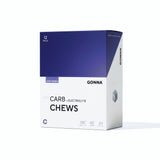
Energy chews
A chew splits a gel's carbohydrate into pieces you eat one at a time. Tear a gel and you have committed to all of it. A strip of chews you take in halves, three now and three in twenty minutes, so the same hourly total arrives in smaller instalments.
C.O1 Carb Chew carries 48 g of carbohydrate and 120 mg of sodium per strip across six chews.
Strong at dosing, taste past hour three, no leaking. Weak at high intensity, where chewing competes with breathing.
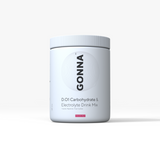
Carbohydrate drink mix
On a bike with two cages, drink mix is the most efficient carbohydrate you will carry. You drink anyway, so the fuel arrives without you reaching for anything.
D.O1 Drink Mix gives 32 g of carbohydrate and 300 mg of sodium per scoop. Two scoops in a 750 ml bottle covers an hour before you clip in.
Strong at cycling, heat, high hourly numbers without eating. Weak at running, and at races where somebody else fills the feed-zone bottles.
Real food
A banana carries roughly 25 g of carbohydrate in packaging you can compost. Dates run dense and cheap. A stroopwafel is about 20 g of sugar in a flat disc that survives a jersey pocket.
Fibre and fat slow gastric emptying, which is the last thing you want when you are trying to move 90 g an hour through your gut. So real food earns its place on a five hour endurance ride and loses it on race day.
Sweets
Wine gums cost a fraction of sports nutrition and go down without argument. The catch sits in the ingredients: sucrose and glucose syrup give you one absorption route and no sodium. That works for two hours. It does not survive five.
Energy bars
Bars carry more carbohydrate per gram than anything else here. They also demand chewing you cannot spare above threshold, and most need water to get down. Worth carrying on gravel and ultra distance.
Which one should I use?
Most people settle on two. Something in the bottle for the baseline, something in the pocket for the top-up.
The format that fails you is the one you skip. Under-fuelling is rarely a maths problem, since most athletes already know they need 60 to 90 g an hour. They just do not want the fourth gel, so they take three, and kilometre 35 of Rotterdam arrives early.
Work out what your event actually needs, in strips and scoops.
Calculate my fuelBas
Sources
- Pfeiffer, B. et al. (2010). Oxidation of solid versus liquid carbohydrate sources during exercise. Medicine & Science in Sports & Exercise.
- Jeukendrup, A. (2008). Carbohydrate feeding during exercise. European Journal of Sport Science.